
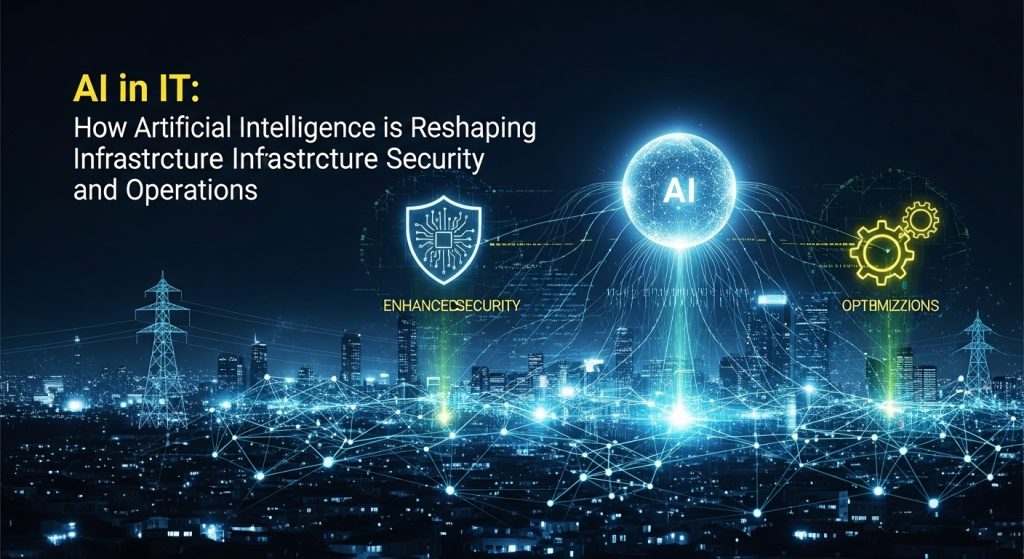
The Paradigm Shift: From Reactive to Predictive IT
Historically, IT operations centered on break-fix models and manual intervention. Artificial Intelligence has inverted this paradigm. Through machine learning (ML) and advanced analytics, systems now process vast telemetry data—logs, metrics, traces—in real-time to identify anomalies, forecast capacity needs, and auto-resolve issues before users report them. This transition, often termed AIOps (Artificial Intelligence for IT Operations), represents the core of the revolution. According to a 2024 Gartner analysis, organizations implementing AIOps reduce incident resolution times by an average of 65% and decrease operational costs by nearly 30% through automation. The value proposition is no longer just efficiency; it is about enabling IT to scale with digital business velocity without proportional cost increases.
Automation and the Evolving IT Workforce
A primary impact of AI is the deep automation of repetitive, high-volume tasks. This includes automated provisioning, patch management, compliance checking, and ticket routing. Robotic Process Automation (RPA), when augmented with AI’s cognitive capabilities, can handle unstructured data and make judgment calls. This does not equate to mass job elimination. Instead, it redefines roles. System administrators evolve into automation architects and AI trainers. Network engineers focus on strategic design while AI handles optimization. The shift demands new skills in data literacy, model supervision, and ethical AI governance. The most successful IT departments are those that strategically redeploy human talent to higher-value innovation and problem-solving activities that AI cannot replicate.
AI in Cybersecurity: A Double-Edged Sword
Cybersecurity is perhaps the most transformed IT domain. AI and ML are integral to modern Security Operations Centers (SOCs). They excel at User and Entity Behavior Analytics (UEBA), establishing baselines of ‘normal’ activity and flagging subtle deviations that indicate insider threats or compromised credentials. AI-powered Security Information and Event Management (SIEM) systems correlate millions of events to surface true positives from noise, dramatically reducing alert fatigue. Furthermore, AI enables predictive threat intelligence by analyzing global dark web data and attack patterns.
However, this integration introduces new complexities. The adversarial use of AI by threat actors is a growing concern, enabling more sophisticated phishing, automated vulnerability discovery, and evasion techniques. The reliance on AI models also creates novel attack surfaces, such as data poisoning or model theft.
### **Comparison: AI-Augmented vs. Traditional Cybersecurity Approaches**
| **Aspect** | **Traditional (Rules/Signature-Based)** | **AI-Augmented (Behavioral/ML-Based)** |
| **Threat Detection** | Reactive; known signatures/patterns | Proactive; identifies novel, zero-day anomalies |
| **Alert Volume** | High noise, many false positives | Lower noise, contextual prioritization |
| **Adaptability** | Static; requires manual rule updates | Dynamic; learns and adapts to environment |
| **Attack Coverage** | Limited to defined rules | Broad; analyzes entire behavioral spectrum |
| **Primary Skill Need** | Threat signature analysts | Data scientists, ML engineers, threat hunters |
| **Key Risk** | Misses unknown threats | Model evasion, adversarial AI, data bias |
Intelligent Infrastructure and Cloud Optimization
AI is the central nervous system of modern cloud-native and hybrid infrastructures. In cloud computing, AI algorithms drive auto-scaling, predictive workload balancing, and intelligent cost optimization. They analyze usage patterns to recommend reserved instance purchases or identify idle resources, leading to significant savings. For on-premises data centers, AI optimizes cooling systems (through digital twins), predicts hardware failures via sensor data analysis (predictive maintenance), and manages power consumption. This creates a self-aware, self-optimizing data center. McKinsey reports that AI-driven energy management can reduce data center power consumption by up to 40% while improving performance. The infrastructure layer is becoming an autonomous, responsive entity rather than a static pool of resources.
AI-Powered IT Support and Service Management
The IT service desk is being revolutionized by conversational AI and natural language processing (NLP). Advanced chatbots and virtual agents now resolve a substantial portion of Level 1 and 2 support tickets without human intervention. They can interpret user queries in natural language, access knowledge bases, execute password resets, or guide users through troubleshooting steps. This provides 24/7 support, instant response, and frees human agents for complex issues. Furthermore, AI analyzes ticket data to identify root causes of recurring problems, enabling IT to address systemic issues rather than symptoms. This moves IT service management from a transactional to a diagnostic and preventive model.
Data Management and the AI Feedback Loop
AI’s effectiveness is contingent on data quality and governance. Ironically, AI is also the solution to the data management crisis it helps create. AI tools automate data classification, tagging, and lineage tracking. They identify sensitive data for compliance (GDPR, CCPA) and optimize storage tiers by predicting access frequency. Critically, IT systems generate the data that trains and refines the AI models themselves, creating a virtuous cycle. Better IT operations data leads to smarter AI, which in turn produces more and higher-quality operational data. This feedback loop is accelerating the pace of improvement in all other AI-IT applications.
Challenges and Strategic Implementation
The revolution is not without hurdles. Key challenges include: **Data Silos & Quality:** AI requires integrated, clean data, which many organizations lack. **Skills Gap:** Shortage of professionals who understand both IT operations and data science. **Integration Complexity:** Legacy systems are often not API-friendly, complicating AI deployment. **Explainability & Trust:** ‘Black box’ AI decisions can be problematic in critical operations; explainable AI (XAI) is a growing need. **Cost:** Initial investment in platforms, talent, and data engineering is substantial.
Successful adoption follows a strategic pattern: start with well-defined, high-value use cases (e.g., automated ticket classification, anomaly detection for critical servers), prove ROI, and then expand. Pilot projects in non-production environments are essential to build trust and refine models before full deployment.
The Future Trajectory: Autonomous IT and Beyond
The end-state of this revolution is the autonomous data center and IT ecosystem—a ‘self-driving’ IT environment where AI not only predicts and reacts but also makes strategic decisions about resource allocation, security posture, and capacity planning with minimal human oversight. We are moving toward intent-based systems where administrators state business goals (e.g., ‘ensure application X has 99.99% availability at lowest cost’), and the AI system configures and manages the underlying infrastructure to achieve it. Furthermore, AI will deepen its integration with business analytics, allowing IT performance metrics to be directly correlated with business outcomes like customer satisfaction or revenue per transaction, cementing IT’s role as a core business driver rather than a cost center.
Frequently Asked Questions
How is AI specifically used in IT operations (AIOps)?
AI in IT operations (AIOps) analyzes machine data to detect anomalies, predict incidents, auto-resolve common problems, and optimize resource use. It correlates events across networks, servers, and applications to identify root causes faster than human teams.
Will AI replace IT jobs?
AI will automate routine tasks, transforming roles rather than eliminating them en masse. Demand is growing for AI trainers, automation strategists, and cybersecurity analysts who work alongside AI. The focus shifts from manual maintenance to strategic oversight and innovation.
What are the biggest risks of using AI in IT?
Key risks include: adversarial AI attacks (e.g., data poisoning), over-reliance on ‘black box’ decisions without explainability, skills shortages for managing AI systems, and integration challenges with legacy infrastructure. Strong governance and human-in-the-loop designs mitigate these.
Is AI in IT only for large enterprises?
No. Cloud-based AIOps and SaaS security tools have lowered entry barriers. Small and mid-sized businesses can adopt AI for specific use cases like automated customer support, basic threat detection, or cloud cost optimization, often via managed service providers.
How do you measure the ROI of AI in IT?
ROI is measured through reduced mean-time-to-resolution (MTTR), lower operational costs from automation, decreased security breach impact, optimized cloud spend, and improved employee productivity from reduced manual toil. Quantifying reduced business downtime is a key metric.